Goal
To improve responses to child and youth victims and their families by providing consistent, coordinated responses that address the presenting issues and full range of victims' needs.
To improve responses to child and youth victims and their families by providing consistent, coordinated responses that address the presenting issues and full range of victims' needs.
Currently, the systems of care charged with caring for children and families are fragmented. Consequently, youth and families enter through several "wrong doors" before finding or receiving adequate services that meet their needs as victims. This approach may cause undue frustration for youth and families at a time when they need the most support.
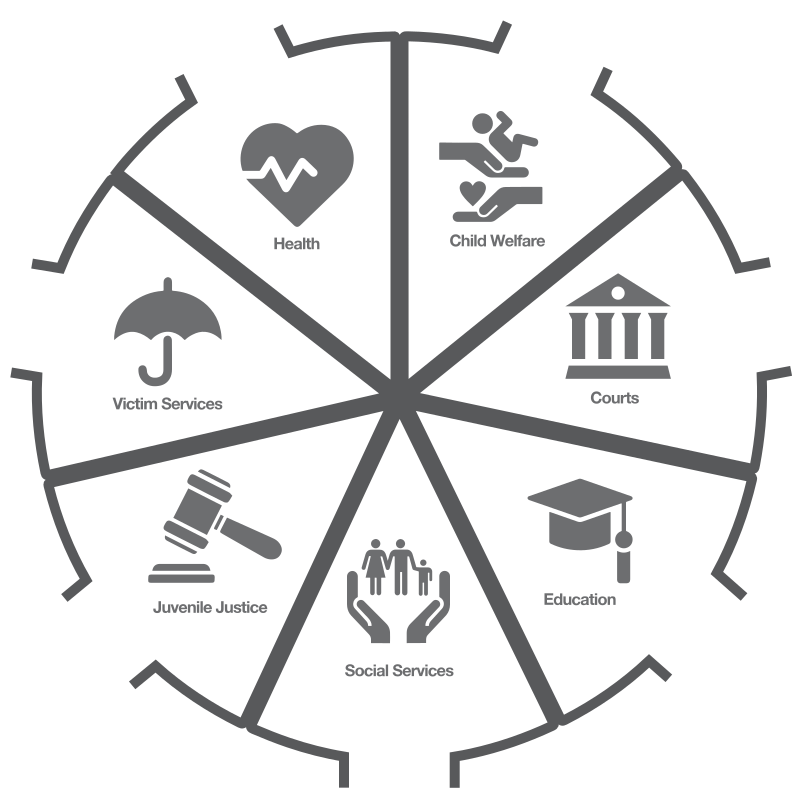
Linked Systems of Care communities are concerned with the healing of individuals, families, and communities who have experienced or have been exposed to violence.
All systems of care are connected and aspire to maximize collective impact through communication, collaboration, and coordination.
Linked Systems of Care provide as much information as possible to families and practitioners so that the most targeted, holistic, safe, and effective interventions are available.
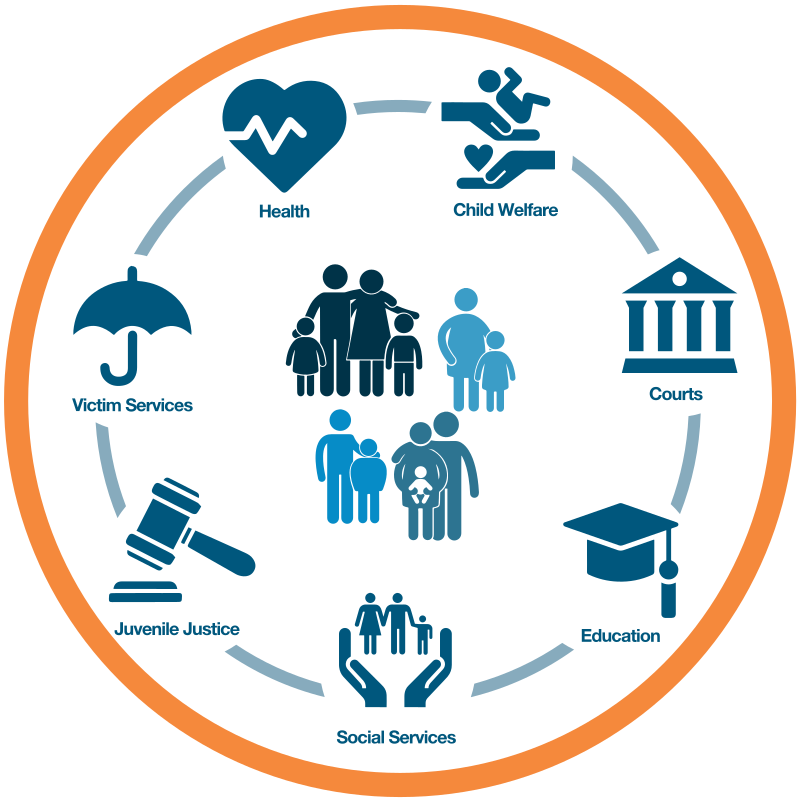
The goal of the Linking Systems of Care project is to formally integrate those systems, by implementing a "no wrong door" approach to equip all systems of care to respond effectively to victims of crime. This approach ensures that these young victims and their families are set on a path toward healing in a timely and thoughtful way.
The Linking Systems of Care for Children and Youth Demonstration Project (LSC) was a demonstration project designed to support and document the work of statewide initiatives as they promoted healing for victims of crime by developing and coordinating trauma-informed prevention and intervention services for these children and youth and their families.
Four states—Illinois, Montana, Ohio, and Virginia—were selected in a competitive process to participate in planning and implementing reforms. Demonstration projects were intentionally designed to document the work of pioneering communities, which are supported by funding and national experts.




Linking Systems of Care for Children and Youth Demonstration Project (LSC) did not propose a single approach! States were funded to identify young victims of crime proactively and work holistically with their families and communities to address their needs. Each state approached their work differently, unified by the LSC Guiding Principles and a “No Wrong Door” approach to victim services.
The four demonstration sites worked in their states to meet the needs of children and youth (and their caregivers) who had been exposed to violence. The LSC work was guided, supported, and documented by the project’s federal partners and national experts.
The LSC sites, Montana, Virginia, Illinois, Ohio, benefited from rigorous project planning, national expertise, peer-to-peer learning, and trial and error. Unified by their adherence to the values and principles set forth in the Guiding Principles, each state’s partners, needs, and approach to victim services and linking systems were unique. The LSC Coordinator Toolkit provides guidance and tools for jurisdictions interested in replicating LSC activities. The LSC Lessons Learned Report narrates a story of how events unfolded.
The Linking Systems of Care for Children and Youth Guiding Principles were developed by national experts in wide-ranging, relevant fields and are offered as a touchstone for leaders initiating and/or guiding new approaches to serving child and youth victims of crime. Guiding Principles can guide values discussions with stakeholders, structure community needs assessments, and assist community collaboratives shape, inform, and review services and referrals to address children and youth exposed to violence.
Linking Systems of Care demonstrated change in four states that were chosen for the strength of their application in a competitive federal award process. They were all remarkable in the strength of their statewide collaborations, diversity of their youth populations and stakeholders, and long-term commitment to modelling change.
In each of the states a lead grantee organization built a Linking Systems of Care network of stakeholders and partners; assessed underserved populations and service gaps; developed concrete strategies, techniques, and tools for meeting victim needs; and, linked child and youth victims to an expanded array of support services. Subject to adequate participation and performance, each demonstration project had the possibility of up to six years of ongoing project support through the Office for Victims of Crime (OVC).

Montana entered Linking Systems of Care as a demonstration site in 2015. Under the leadership of the Montana Board of Crime Control, they implemented consistent screening for childhood through young adults exposure to crime as a victim and worked with a diverse range of communities to link children and youth to services. Their work encompassed urban and rural areas of the state, and they worked closely with Tribal and non-Tribal partners.

Virginia entered Linking Systems of Care as a demonstration state in 2015. Under the leadership of their state Department of Social Services, they implemented strategies across a diverse range of communities and stakeholder agencies to screen children and youth exposed to crime, coordinated victim support services, and built a foundation of state policies and tools designed to sustain Linking Systems of Care practices.

Illinois entered Linking Systems of Care in 2018. Under the leadership of the Illinois Criminal Justice Information Authority (ICJIA), they completed a 15-month planning process and entered into implementation that brought together state agencies across various systems of care , conducted a comprehensive gap analysis that addressed both urban and rural communities, and surveyed service providers and the families of children and youth who had experienced crime as a victim.

Ohio entered Linking Systems of Care in 2018. Under the leadership of the Ohio Attorney General’s Office, they assembled a broad range of stakeholder agencies and embarked on a planning and implementation process to identify gaps within the current victims’ support network and developed a plan for identifying needs and making robust service referrals.

Connect here for conversations on children, youth, and trauma